There are few news subjects more reliably depressing than nutritional science.
A glance at the headlines will tell you that sugar is bad for you, red meat is bad for you, and alcohol is really, really bad for you. The message seems to be that if a food or drink gives you even an iota of pleasure, it’s almost certain that your body will pay for it, sooner or later.
But there is one exception, a glorious concoction that was first consumed in ninth-century Ethiopia, that fueled the Age of Enlightenment, that has kept our troops going from the Revolutionary War to today. It is one of the first globally traded commodities, connecting producers in Africa, South America, and Southeast Asia to consumers around the world in a $245 billion market. It can be had flat or steamed, long or short, hot or iced, black or with milk, and in any number of combinations that end in the letters “-cino.”
View Link
However you take it, the equivalent of more than 2 billion cups of it are consumed every day. Unlike so many other products we experience in our daily lives, it’s actually been getting better and better. And medical science is increasingly finding that all those cups are actually good for us.
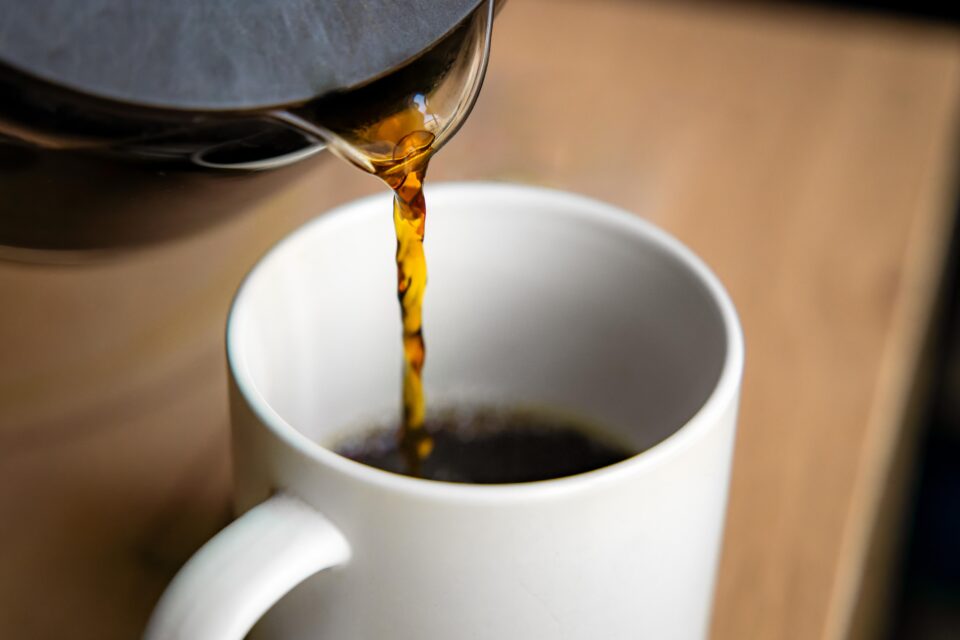
I’m referring, of course, to the daily miracle that is coffee. Our grandparents were told to cut back on this dirty-tasting beverage but today, it has become one of the most studied and virtuous and quietly luxurious parts of the human diet. All in all, coffee — yes, coffee — is one of the best reasons to be alive in the year 2026.
Coffee and cigarettes
A generation ago, coffee was supposed to be something you quit, like cigarettes or that second martini. Doctors would warn pregnant women against drinking it; cardiologists would tell their middle-aged patients to give it up. The World Health Organization’s International Research Agency for Cancer kept it on its “possibly carcinogenic” list for 25 years, only downgrading it in 2016 after a review of the evidence found no clear link.
Why exactly was something as seemingly innocuous as coffee considered a real health threat for so long? Coffee contains caffeine (yes, even decaf in small amounts), caffeine is a stimulant, and stimulants can have an impact on heart health. There were 20th-century studies that linked coffee consumption to pancreatic cancer, bladder cancer, and even birth defects. None of those studies have held up to scrutiny, however, and the reason why is a classic bugaboo of medical research: confounding factors.
For much of the 20th century, coffee went with cigarettes like peanut butter goes with jelly — except, in this case, peanut butter is largely innocuous, while jelly is actively trying to murder you. Based on data collected between 1976 and 1980, heavy coffee drinkers in the US were six to seven times more likely to be smokers than non-coffee drinkers. All that smoking among coffee drinkers in the past meant they were more likely to suffer heart disease or cancer or any other health threat that cigarettes are connected to, and that showed up in the studies. But it wasn’t the cup of coffee that was doing the damage. It was the cigarette they were smoking alongside it.
As smoking collapsed, a new generation of better-designed studies took a clearer view of coffee’s health effects. Major prospective cohort studies followed enormous populations for decades, with smoking properly accounted for, and looked at coffee consumption against outcomes ranging from dementia to liver cancer to all-cause mortality. The results were almost embarrassingly consistent in coffee’s favor. The recently released USDA Dietary Guidelines officially classify unsweetened coffee as “healthy,” and consumption of up to roughly four cups a day is considered safe for most adults. Even pregnant women can enjoy a cup or two a day.
So that’s the baseline: Coffee will not kill you. But more recent research suggests coffee is more than simply benign. It’s something that can actively benefit your health in numerous ways.
It’s good for you. Really.
The study arrived in JAMA in March, and I read it with a cup of joe close by. Researchers at Mass General Brigham, Harvard, and the Broad Institute had been following 131,821 American doctors and nurses for 43 years (possibly the longest single piece of evidence we will ever get on a daily dietary habit and a chronic disease), and by the end of the study, 11,033 had developed dementia. But the participants who drank two to three cups of caffeinated coffee a day were 18 percent less likely to be among them. A separate Cleveland Clinic analysis tied the effect specifically to caffeinated coffee. Nature described the relationship in coffee drinkers as “slower brain aging.”
That study didn’t appear out of nowhere. It joins a five-year run in which essentially every major endpoint in coffee research has come back in favor of the bean.
A 2019 meta-analysis in the European Journal of Epidemiology covering 40 cohort studies and millions of participants found the lowest all-cause mortality risk at intakes of about 3.5 cups a day, and a 2025 analysis confirmed it in US adults. A meta-analysis of 30 prospective studies covering 1.18 million participants found a 29 percent reduction in diabetes risk at the highest intake category, with risk dropping by 6 percent with each additional daily cup. Both caffeinated and decaffeinated coffee delivered protection, which points to chlorogenic acid and other polyphenols, rather than caffeine, as the active mechanism. Just keep it black — add sugar or artificial sweeteners and the benefit largely disappears.
The liver may be the single organ that benefits most. A PLOS One meta-analysis found 39 percent lower odds of cirrhosis among coffee drinkers; a Wiley analysis found a 44 percent reduction in liver-cancer risk for those drinking two or more cups daily. The protective effect extends to fatty liver disease and viral hepatitis. Coffee is, plausibly, doing something for liver health that no medication does at population scale.
So what’s actually happening at the biological level? Coffee is the largest single source of polyphenols and antioxidants in the average Western diet, and its main bioactive compound, chlorogenic acid, suppresses several pro-inflammatory pathways while raising the body’s antioxidant defenses. While caffeine may be the reason most of us turn to coffee in the bleary morning hours, it’s the biochemistry running alongside it that is doing most of the medical work. The coffee mug is, in plain pharmacological terms, a delivery system for some of the most well-studied anti-inflammatory compounds humans have ever measured.
Plus, it’s really good.
How coffee got better
It wasn’t always, though. For most of the 20th century, Americans subsisted on canned, pre-ground, vacuum-packed grocery-store coffee like Folgers or Maxwell House. Worse, by the 1970s, almost a third of all coffee imported into the US was being turned — nay, perverted — into instant, like Sanka or Folgers Crystals.
Perhaps not surprisingly, per-capita coffee consumption in the US fell almost continuously from a 1946 peak through the early 1990s. It wasn’t until the coming of Starbucks — now reviled as a harbinger of gentrification — that Americans showed that they would pay more for coffee that didn’t taste as if it had been strained through a gym sock.
Then in the 2000s came specialty roasters such as Blue Bottle, Stumptown, Intelligentsia, Counter Culture, and Verve, which treated coffee the way good wineries treat wine — single origin, single farm, traceable lots, careful roast profiles, brewing methods tuned to the specific bean. The Specialty Coffee Association developed the cupping protocol and the 100-point scoring system that gave coffees an objective quality scale.
And guess what? As the coffee got better, we drank more of it. In 2024 the National Coffee Association reported that 45 percent of US adults had drunk speciality coffee in the past day, up around 80 percent since 2011 and surpassing conventional coffee consumption for the first time. Globally, the speciality coffee market hit $111.5 billion in 2025, while the number of specialty coffee shops in the US grew 21 percent between 2017 and 2022. Which means that one, a cafe probably opened up down the street from you while you were reading this, and two, there’s no excuse now for bad coffee.
A cup of progress
Coffee isn’t a cure-all, even if it can sometimes feel that way at 7 am on a Monday. Caffeine has a half-life of five to six hours in most adults, so drinking after 2 pm can mess with your sleep, which in turn can negate many of the health benefits of consumption. That’s one reason why a 2025 analysis found that while morning-only coffee drinkers were 16 percent less likely to die of any cause than non-drinkers, that benefit largely disappeared for all-day drinkers. For much the same reason, overconsumption — more than four cups or so in a day — can lead to anxiety, headaches, and worse heart health. Regularly adding sugar or milk will dilute or eliminate those benefits as well.
There’s also reason to fear for the future of coffee. Coffee beans are sensitive souls, and climate change risks upsetting the very specific environments needed to make a decent cup. A 2026 review by the agricultural lender Rabobank projected that 20 percent of currently cultivated land for arabica beans may become unsuitable by 2050, while devastating coffee leaf rust outbreaks in Central America are projected to worsen as temperature ranges expand the fungus’s range upward. Some regions like Ethiopia may actually become more hospitable with warming, but if saving the world isn’t a good enough reason to support climate action, maybe saving your cuppa will be.
The more we learn about the things we eat and drink, it seems the more we have to worry about. But coffee is the exception. Its nutritional profile has improved under rigorous examination, just as its taste profile has improved under ever greater specialization and globalization. You’re not just drinking coffee every morning. You’re drinking a cup of progress.
A version of this story originally appeared in the Good News newsletter. Sign up here!