
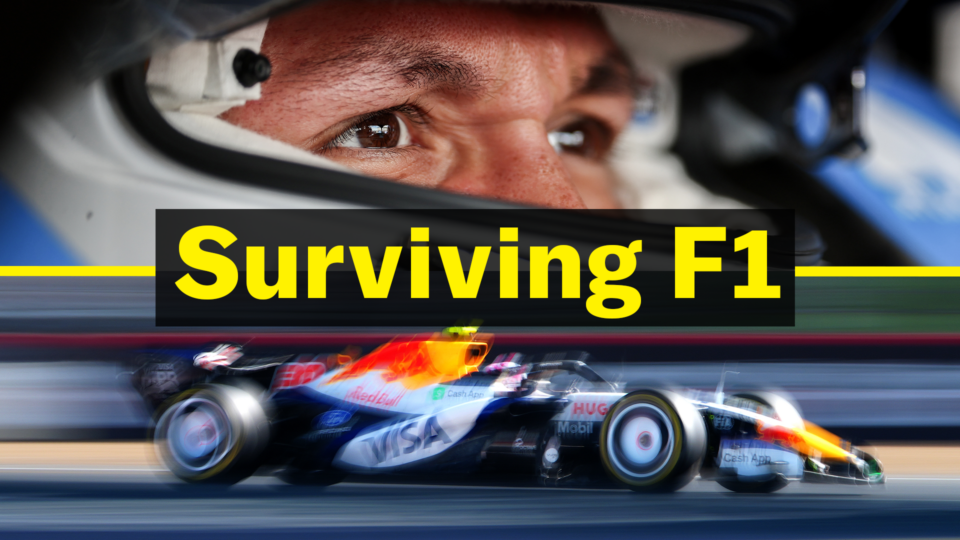
F1 races are exhilarating. While racing alongside 21 other cars, an F1 driver can reach speeds of up to 231 mph, making it one of the world’s most dangerous sports.
And F1 drivers need to be physically prepared to prevent disaster. Over the course of a single race, they experience hundreds of pounds of force, temperatures up to 130°F, and risk extreme dehydration that can lead to lowered brain function. In order to stay on the road and not pass out, F1 drivers have to be in peak physical condition.
In order to find out how F1 drivers can survive a sport that is so physically demanding, I hit the gym. Since F1 is such an international sport, there aren’t many specialized trainers in the US. So with the help of an F1 performance expert currently based in the United Arab Emirates, I worked out with David Dunlop, a strength and conditioning coach who works with NFL players. And it turns out that training for F1 is surprisingly similar to training to be a linebacker.
Read more about the fitness required to drive in an F1 race:
Mercedes has an excellent breakdown of G-force on a turn.
This article from The Drive breaks down the physics of an F1 race.
Motorsport Industry Association on how F1 simulators help drivers train for the mental side of races.
New York Times article about the history of F1 in the US (and why people in the states are talking about it now).
This video is presented by the Ford Motor Company. Ford doesn’t have a say in our editorial decisions, but they make videos like this one possible.
